
 Registrati
 Login
Login
Log in or Create account

 Territorio e istituzioni
 Lavoro Persona Tecnologia
 America Latina
 Africa
 Osservatorio di Diritto sanitario
 Osservatorio sul diritto elettorale
 Osservatorio Trasparenza
 Human Rights
 Storico focus
 Riforme istituzionali e forma di governo
FOCUS - Lavoro Persona Tecnologia
La transizione ecologica nell’esperienza tedesca tra codeterminazione aziendale e contrattazione collettiva: il caso del settore automotive in prospettiva comparata
Abstract [It]: Il presente lavoro si sofferma sui principali strumenti messi a disposizione nell’ordinamento tedesco dalla codeterminazione aziendale (betriebliche Mitbestimmung) nell’affrontare la transizione ecologica. Questo viene fatto muovendo dalle competenze dei consigli di azienda in materia di tutela ambientale inserite nella legge sulla costituzione aziendale (Betriebsverfassungsgesetz) con la riforma del 2001. Viene esaminato inoltre sinteticamente il ruolo che può svolgere la contrattazione collettiva. In particolare l’attenzione si sofferma sull’esperienza dei contratti collettivi “per il futuro” (Zukunftstarifverträge) introdotti in alcuni settori dell’industria e stipulati anche nel settore automotive, per anticipare rispetto al momento della crisi la negoziazione sul futuro delle produzioni. Proprio quest’ultimo, la sua crisi e le evidenti esigenze di riconversione che presenta verranno presi in esame per meglio comprendere l’idoneità degli strumenti su ripercorsi ad affrontare le più complesse sfide poste dalla transizione ecologica. Tutto questo verrà messo in conclusione a confronto con le più recenti esperienze, necessariamente limitate alla contrattazione collettiva, che si sono sviluppate nell’ordinamento italiano.
Title: The ecological transition in German collective labour law between betriebliche Mitbestimmung and collective bargaining: the case of automotive sector in a comparative perspective
Abstract [En]: This article focuses on the main instruments available in the german Works Council System (betriebliche Mitbestimmung) in dealing with the ecological transition. This is done starting from works councils’ rights of participation in the field of environmental protection included in the Betriebsverfassungsgesetz. The role that collective bargaining can play is also briefly examined. In particular, the focus is on the experience of the future agreements (Zukunftstarifverträge) introduced by collective bargaining - with new framework established in 2021 - in some industrial sectors and also concluded in the automotive sector, in order to anticipate negotiations on the future of production, co-governing and anticipating the green transition instead rather than only reacting to potential crises. It is precisely the automotive sector, its crisis and the obvious need for reconversion that it presents that will be examined in order to better understand the suitability of the instruments outlined above to face the more complex challenges posed by the ecological transition. All this will be compared in conclusion with the most recent experiences, necessarily limited to collective bargaining, that have developed in the Italian system.
Parole chiave: Partecipazione dei lavoratori, contrattazione collettiva, transizione ecologica, comparazione giuridica, diritto del lavoro tedesco
Keywords: Workers Participation, collective bargaining, ecological transition, comparative labour law, German labour law
Sommario: 1. Tra partecipazione e conflitto: la just transition nel settore automotive europeo. 2. La betriebliche Mitbestimmung e i suoi “limiti intrinseci”. 3. Contrattazione collettiva e conflitto collettivo in Germania. 3.1. I cd. “contratti collettivi per il futuro” e il loro sviluppo nel settore automotive. 3.2. Il diritto di sciopero. 3.2.1. La campagna #WirFahrenZusammen. 4. Riflessioni conclusive sul sistema italiano di relazioni industriali.
 Scarica il Documento integrale
NUMERO 33 - ALTRI ARTICOLI
-
ITALIA - DOTTRINA
Articolo 11 della Costituzione, recente giurisprudenza e diritto dell'Unione europea. Una norma che “compare” e “scompare”?
ITALIA - DOTTRINAConsiderazioni sulla forma di Stato europea
-
ITALIA - DOTTRINA
Festina lente. Considerazioni sui ritardi nell’elezione parlamentare dei giudici costituzionali
ITALIA - DOTTRINAAspetti innovativi e sfide derivati dall'introduzione della contabilità c.d. accrual nelle amministrazioni pubbliche italiane
-
ITALIA - DOTTRINA
La democrazia digitale (o e-democracy) nello spazio cibernetico: inquadramento teorico e profili applicativi
ITALIA - DOCUMENTAZIONEOsservatorio di diritto sanitario
 STUDI FEDERALISMI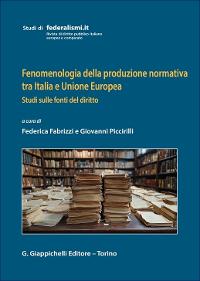
Fenomenologia della produzione normativa tra Italia e Unione Europea
F. Fabrizzi, G. Piccirilli (a cura di)2025
 disponibile anche in e-Book
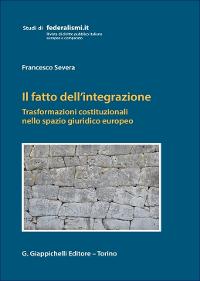
Il fatto dell’integrazione
F. Severa2025
disponibile anche in e-Book





Segreteria di redazione
Chiara Arruzzoli; Simone Barbareschi; Alina Iuliana Benea; Andrea Caravita di Toritto; Maria Cristina Carbone; Adriano Dirri; Eleonora Iannario; Giulia Renzi; Giulia Santomauro; Francesco Severa; Sergio Spatola; Giulia Vasino.
E-mail: redazione@federalismi.it
Informazioni generali
Codice etico
Collana "Studi di federalismi.it"
Powered by
Execution time: 18 ms - Your address is 216.73.216.191