
 Registrati
 Login

Log in or Create account

 Africa
 Territorio e istituzioni
 America Latina
 Osservatorio sul diritto elettorale
 Osservatorio Trasparenza
 Human Rights
 Lavoro Persona Tecnologia
 Osservatorio di Diritto sanitario
 Storico focus
 Riforme istituzionali e forma di governo
FOCUS - Africa N. 2 - 19/01/2026
Silent Enablers: The Role of Private Military and Security Companies in Post-Coup African Regimes
Abstract [En]: This paper examines the expanding role of private military and security companies (PMSCs) in Africa’s post-coup regimes. Focusing on cases such as Mali, Sudan, and the Central African Republic, it analyses how PMSCs act as “silent enablers”, sustaining transitional governments while undermining regional norms on constitutional governance. The study reviews existing legal frameworks, including the Montreux Document and the UN Draft Convention, and proposes an African model clause to regulate or restrict foreign PMSCs employed by non-democratic authorities.
Titolo: Facilitatori silenziosi: il ruolo delle società militari e di sicurezza private nei regimi africani post-colpo di Stato
Abstract [It]: Questo articolo esamina il ruolo crescente delle società militari e di sicurezza private (PMSC) nei regimi africani successivi ai colpi di Stato. Concentrandosi su casi come Mali, Sudan e Repubblica Centrafricana, analizza come le PMSC agiscano da “abilitatori silenziosi”, sostenendo i governi transitori mentre indeboliscono le norme regionali sulla governance costituzionale. Lo studio esamina i quadri giuridici esistenti, tra cui il Documento di Montreux e la bozza di Convenzione ONU, e propone una clausola modello africana per regolare o limitare l’impiego di PMSC straniere da parte di autorità non democratiche.
Keywords: Geopolitical Influence in Africa; African Union Legal Framework, Sovereignty and External Intervention; Private Military and Security Companies (PMSCs), Security Governance in Post-Coup States
Parole chiave: Influenza geopolitica in Africa; Quadro giuridico dell’Unione Africana; Sovranità e intervento esterno; Società militari e di sicurezza private (PMSC), Governance della sicurezza negli Stati post-golpe
Table of Contents: 1. The Return of Coups and the Rise of Private Military and Security Companies in Africa. 2. Legal and Geopolitical Background. 2.1. The African Union’s Normative Architecture. 2.2. The Status of PMSCs under International Law. 2.3. The Geopolitical Context. 3. Post-Coup Dynamics: PMSCs as Instruments of Control. 3.1. Mali: Security Outsourcing and the Crisis of Regional Legitimacy. 3.2. Sudan: Fragmented Sovereignty and Parallel Militaries. 3.3. Central African Republic: From Security Provider to Political Actor. 3.4. The Political Economy of Coercion. 4. Regional and Continental Implications. 4.1. Erosion of the Normative Framework. 4.2. Undermining Collective Enforcement Mechanisms. 4.3. The Problem of Sovereignty and External Influence. 4.4. Institutional Fragmentation and the Security Economy. 4.5. Democratic and Human Rights Consequences. 5. External Actors and the Privatization of Security. 5.1. Russia and the Wagner Model. 5.2. China’s “Security Diplomacy” and Corporate Protection. 5.3. Western Actors and the Persistence of Structural Dependency. 5.4. Regional Competition and the New Security Marketplace. 5.5. Implications for International Law and Governance. 6. Normative Gaps and Accountability Mechanisms. 6.1. The Limits of the Existing International Framework. 6.2. Domestic and Regional Legal Deficits. 6.3. Accountability and Attribution under International Law. 6.4. The Role of Human Rights and Soft Law Mechanisms. 6.5. Towards a Continental Accountability Framework. 7. Regulatory Proposals and African Solutions. 7.1. Guiding Principles for an African Regulatory Model. 7.2. The AU Model Law on PMSCs. 7.3. Strengthening Institutional Oversight. 7.4. Integrating PMSCs into Africa’s Peace and Security Architecture. 7.5. Enhancing Judicial Remedies and Victim Protection. 7.6. Aligning Regulation with Africa’s Strategic Vision. 8. Conclusion: Reclaiming Sovereignty in the Age of Privatized Coercion. 8.1. The Political Economy of Outsourced Sovereignty. 8.2. Regional Fragility and the Challenge of Collective Enforcement. 8.3. The Global Dimension: Africa as a Theatre of Competing Models. 8.4. Towards a Renewed Normative Vision. 8.5. Africa as a Norm Entrepreneur in Global Security Governance. 8.6. Final Reflections.
 Scarica il Documento integrale
NUMERO 3 - ALTRI ARTICOLI
-
ITALIA - DOTTRINA
From the E-Commerce Directive to the Digital Services Act (DSA): Increasing user safety and security through “by-design” risk management
ITALIA - DOCUMENTAZIONEOsservatorio del 28 gennaio 2026
-
ITALIA - DOTTRINA
I non-luoghi della normatività: dalla regolazione alla post-law
ITALIA - DOTTRINAIl nuovo regionalismo dei BRICS e la tenuta della Rule of Law in Europa
 STUDI FEDERALISMI
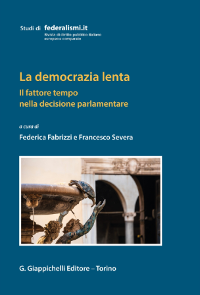
La democrazia lenta. Il fattore tempo nella decisione parlamentare
F. Fabrizzi, F. Severa (a cura di)2026
 disponibile anche in e-Book





Segreteria di redazione
Chiara Arruzzoli; Simone Barbareschi; Alina Iuliana Benea; Andrea Caravita di Toritto; Maria Cristina Carbone; Adriano Dirri; Eleonora Iannario; Giulia Renzi; Giulia Santomauro; Francesco Severa; Sergio Spatola; Giulia Vasino.
E-mail: redazione@federalismi.it
Informazioni generali
Codice etico
Collana "Studi di federalismi.it"
Powered by
Execution time: 40 ms - Your address is 216.73.216.237
25/09/2026
19/01/2026
05/09/2025
23/12/2024
12/08/2024
15/12/2023
21/07/2023
14/12/2022
05/08/2022
15/12/2021
15/09/2021
28/04/2021
25/11/2020
15/07/2020
29/04/2020
11/12/2019
10/07/2019
10/04/2019
19/12/2018
11/07/2018
21/03/2018
20/11/2017
21/07/2017
20/02/2015
14/07/2014
14/03/2014
05/07/2013