
 Registrati
 Login
Login
Log in or Create account

 Africa
 Territorio e istituzioni
 America Latina
 Osservatorio sul diritto elettorale
 Osservatorio Trasparenza
 Human Rights
 Lavoro Persona Tecnologia
 Osservatorio di Diritto sanitario
 Storico focus
 Riforme istituzionali e forma di governo
FOCUS - Academic Freedom N. 27 - 09/10/2026
The organisation of higher education institutions in light of academic freedom
Abstract [En]: In 2018, the state of Thuringia reformed its Higher Education Act and introduced a number of changes. Several university professors lodged constitutional complaints with the Federal Constitutional Court, primarily against the new rules on the organisation of the universities. For the most part, the complainants were unsuccessful. Nevertheless, the decision leads to a constitutional fine-tuning of higher education law. This article provides an overview of the proceedings and the underlying issues in higher education law, and assesses the ruling from a constitutional perspective.
Titolo: L'organizzazione degli istituti di istruzione superiore alla luce della libertà accademica
Abstract [It]: Nel 2018, lo Stato della Turingia ha riformato la propria legge sull’istruzione superiore. Diversi docenti universitari hanno presentato ricorso alla Corte costituzionale federale, principalmente contro le nuove norme relative all’organizzazione delle università. Per la maggior parte, i ricorrenti non hanno avuto successo. Tuttavia, la decisione porta a un adeguamento costituzionale del diritto dell’istruzione superiore. Questo articolo fornisce una panoramica del procedimento e delle questioni di fondo relative alla legge sull’istruzione superiore e valuta la sentenza da una prospettiva costituzionale.
Keywords: German university system, German Constitutional Court, Thuringian Higher Education Act, constitutional law
Parole chiave: Sistema universitario tedesco, Tribunale costituzionale tedesco, legge sull’istruzione superiore della Turingia, giurisprudenza costituzionale
Table of contents: 1. The fundamental right to academic freedom and its influence on the organisation of higher education institutions. 2. The reform(s) of the Higher Education Act of the State of Thuringia. 3. The decision of the Federal Constitutional Court on the Thuringian Higher Education Act. 3.1. Interpretation of the rules on university governance in accordance with the constitution. 3.1.1. The senate’s powers of appointment and oversight in relation to the university leadership. 3.1.2. The senate’s influence on (external) governance instruments. 3.1.3. The Senate’s influence on the (internal) allocation of resources. 3.2. Constitutional issues arising from the handling of matters directly relating to research and teaching. 3.2.1. The unconstitutionality of equal representation for non-academic staff. 3.2.2. Interpretation of the arbitration mechanism in accordance with the constitution. 3.3. Despite the lack of a ruling on the merits: the constitutionality of the compulsory attendance rule. 4. Conclusions and outlook.
 Scarica il Documento integrale
NUMERO 27 - ALTRI ARTICOLI
-
ITALIA - DOTTRINA
Cittadinanza italiana ed europea. Un film a più tempi con un finale ancora da scrivere
ITALIA - PAPERLegge elettorale: intendersi anzitutto sui criteri
ITALIA - DOTTRINAIl regionalismo di Livio Paladin
-
ITALIA - PAPER
Una legge elettorale per avere una maggioranza e un governo
ITALIA - DOTTRINAL’apprendista istruttore. L’intelligenza artificiale sperimentata nell’ambito dei controlli sulla SCIA edilizia
ITALIA - PAPERIl sistema elettorale nell’era della regressione democratica
-
ITALIA - DOTTRINA
Il RENTRI e la digitalizzazione della tracciabilità: funzione giuridica, struttura e profili critici
ITALIA - DOTTRINAGiudizi di legittimità costituzionale e discrezionalità legislativa: un rallentamento nella “fuga dalle inammissibilità” della Corte?
 STUDI FEDERALISMI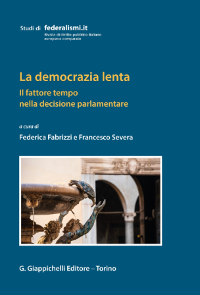
La democrazia lenta. Il fattore tempo nella decisione parlamentare
F. Fabrizzi, F. Severa (a cura di)2026
 disponibile anche in e-Book





Segreteria di redazione
Chiara Arruzzoli; Simone Barbareschi; Alina Iuliana Benea; Andrea Caravita di Toritto; Maria Cristina Carbone; Adriano Dirri; Eleonora Iannario; Giulia Renzi; Giulia Santomauro; Francesco Severa; Sergio Spatola; Giulia Vasino.
E-mail: redazione@federalismi.it
Informazioni generali
Codice etico
Collana "Studi di federalismi.it"
Powered by
Execution time: 35 ms - Your address is 216.73.217.143
09/10/2026
29/06/2026
30/03/2026
20/02/2026
30/01/2026
08/08/2025
30/05/2025
14/04/2025
24/01/2025
01/11/2024
30/08/2024
29/07/2024
03/06/2024
15/03/2024
29/12/2023
04/08/2023
05/06/2023
30/01/2023
09/12/2022
28/10/2022
28/03/2022
02/02/2022
17/01/2022
12/02/2021
18/01/2021
13/11/2020
12/10/2020
17/06/2020
01/06/2020
18/05/2020
04/05/2020
24/04/2020
10/04/2020
27/03/2020
10/04/2020
25/10/2019
27/09/2019
15/04/2019
25/03/2019
14/01/2019
14/12/2018
16/11/2018
09/11/2018
14/09/2018
03/09/2018
22/06/2018
23/02/2018
27/11/2017
02/10/2017